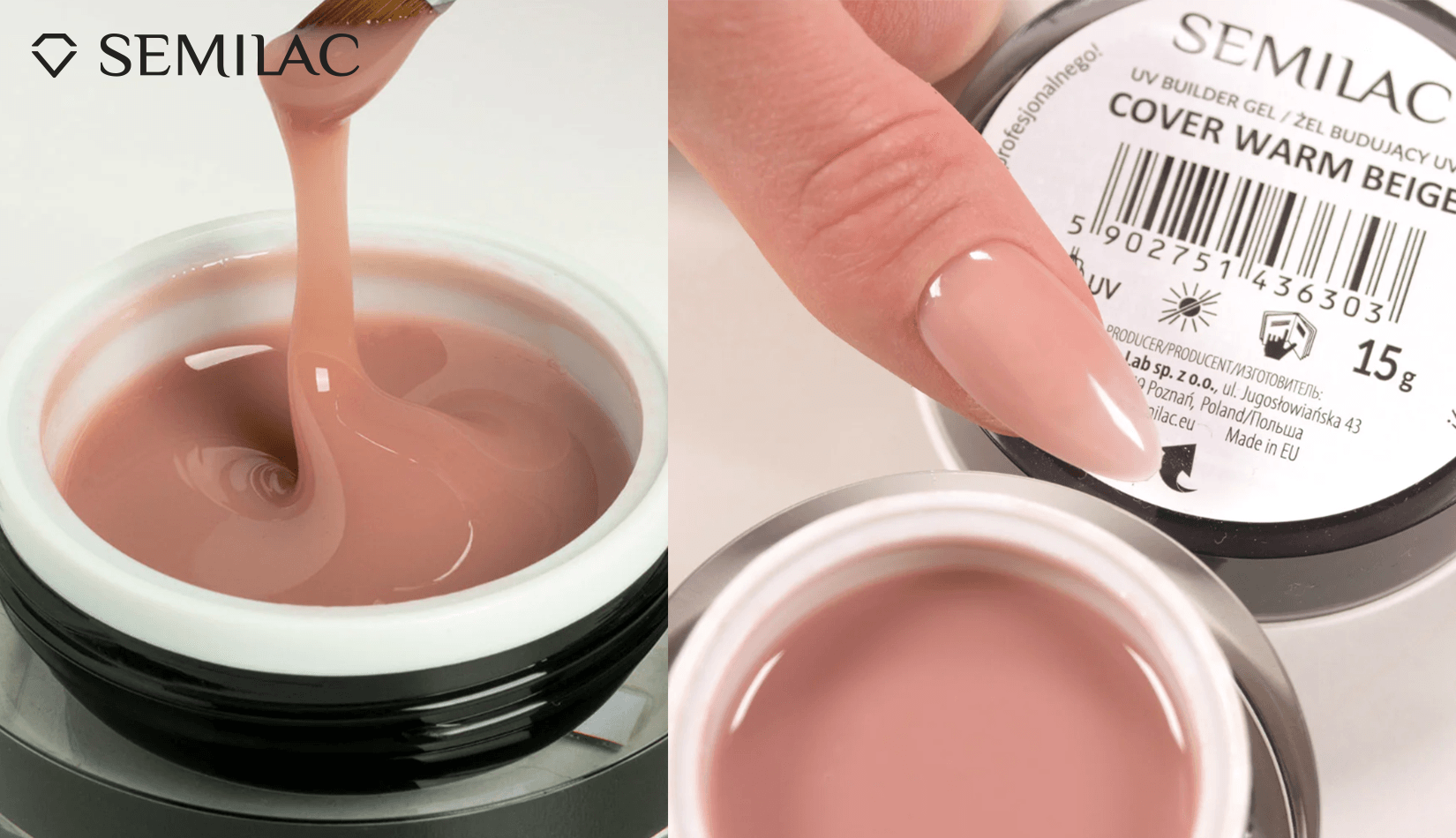
Builder gel at home sounds like a great idea. Stronger nails, longer wear, that clean “salon finish” without leaving your house.
In reality? Half the time it turns into thick, uneven layers, lifting after a few days, and a quiet identity crisis over why your nails suddenly look… bulky.
Builder gel isn’t the problem. Using it without understanding when it actually makes sense is.
When Builder gel Does Make Sense
Not everyone needs builder gel. But for some, it’s genuinely worth it.
It works well if:
-
Your nails are naturally weak or bendy
Builder gel adds structure, not just colour. If your nails flex a lot, this helps prevent breakage. -
You’re trying to grow your natural length
It creates a protective layer that allows nails to grow without snapping every time you open a can or exist too confidently. -
You want a slightly structured, “apex” look
That subtle curve that makes nails look more refined and balanced doesn’t happen with regular base coats. -
You’re okay with a bit more effort
Builder gel is not a “quick manicure”. It requires control, patience and at least a vague respect for technique.
When It Really Doesn’t
Here’s where things go wrong.
Builder gel is unnecessary if:
-
Your nails are already strong and short
You’re adding bulk for no reason. A good base would do the job faster and cleaner. -
You just want colour and shine
Builder gel is not a replacement for UV gel polish. It’s a structure product. Treating it like a thick base coat is how chaos begins. -
You don’t have time (or patience)
Rushing builder gel = uneven surface, flooding cuticles, lifting within days. -
You’re not confident with application yet
This isn’t the place to “figure it out as you go”. The margin for error is… generous, but visible.

The Most Common Mistakes (That Ruin the Whole Look)
Let’s address the usual suspects.
1. Too Much Product
More builder gel does not mean stronger nails.
It means:
- bulky shape
- uneven structure
- longer curing time
- higher risk of lifting
Builder gel should be controlled, not poured on like you’re icing a cake.
2. No Apex (or a Random One)
The apex is what gives the nail strength and balance.
Common home version:
- flat nail with thick edges
- or a random bump somewhere in the middle
Both look off. And they don’t actually improve durability.
3. Flooded Cuticles
This is the fastest way to lifting.
If gel touches the skin:
- it breaks the seal
- air gets in
- your manicure starts lifting earlier than your motivation on a Monday
4. Skipping Proper Prep
Builder gel will not “stick better” just because it’s thicker.
Without proper prep (light buff, clean plate, dehydration):
- it lifts
- it chips
- it betrays you
Predictably.
5. Treating It Like a Base Coat
Builder gel is not something you slap on in 30 seconds.
It needs:
- controlled placement
- levelling
- attention to structure
Otherwise, you’re just creating a thick, uneven layer that behaves worse than a regular base.

So… Base or Builder?
Here’s the simplest way to decide:
-
Choose a base coat if:
you want speed, simplicity and a clean look -
Choose builder gel if:
you need structure, durability and are willing to do it properly
There’s no upgrade just for the sake of it.
The Real Takeaway
Builder gel at home isn’t a bad idea.
But it’s not a shortcut either. It’s a step up in technique - and if you skip that part, the results will show. Immediately.
Sometimes the most “put-together” nails aren’t the most advanced ones.
They’re the ones done well, with the right product… instead of the most ambitious one you weren’t ready for.