Gel nail polish is not being banned in the UK. New restrictions apply to gel nail products containing the photoinitiator TPO.
Below are the dates, what they mean for you at home, and what they mean if you work in a salon.
Is gel nail polish being banned in the UK?
No. Gel manicures are staying, gel polish is staying, and your lamp is staying.
What changes is one ingredient. TPO (trimethylbenzoyl diphenylphosphine oxide) is being removed from cosmetic products sold in Great Britain. Most gel brands have already reformulated without it, and the products cure and wear the same way.
The headlines saying “gel polish banned” are describing an ingredient restriction, not a ban on gel manicures.
Just here for the products?
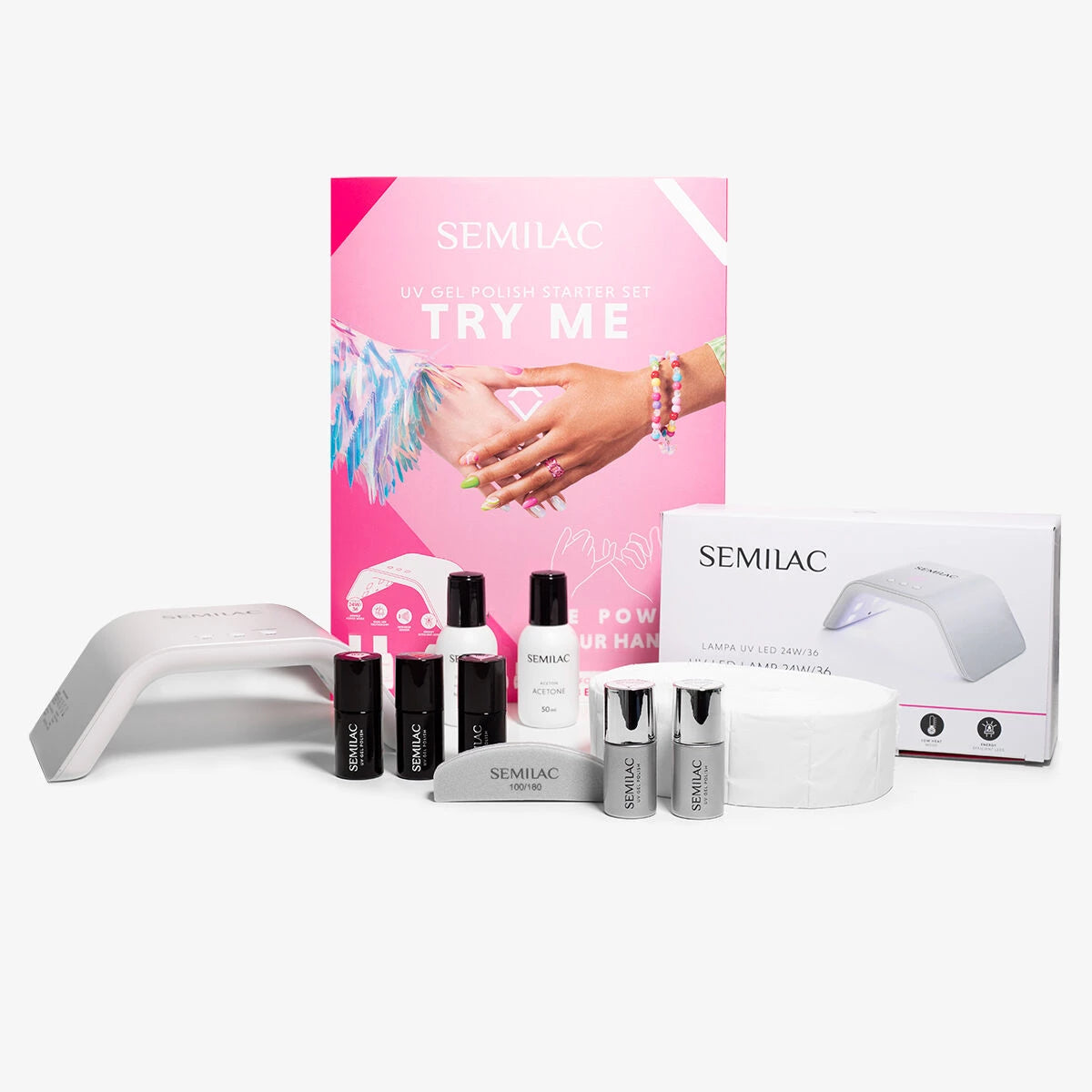
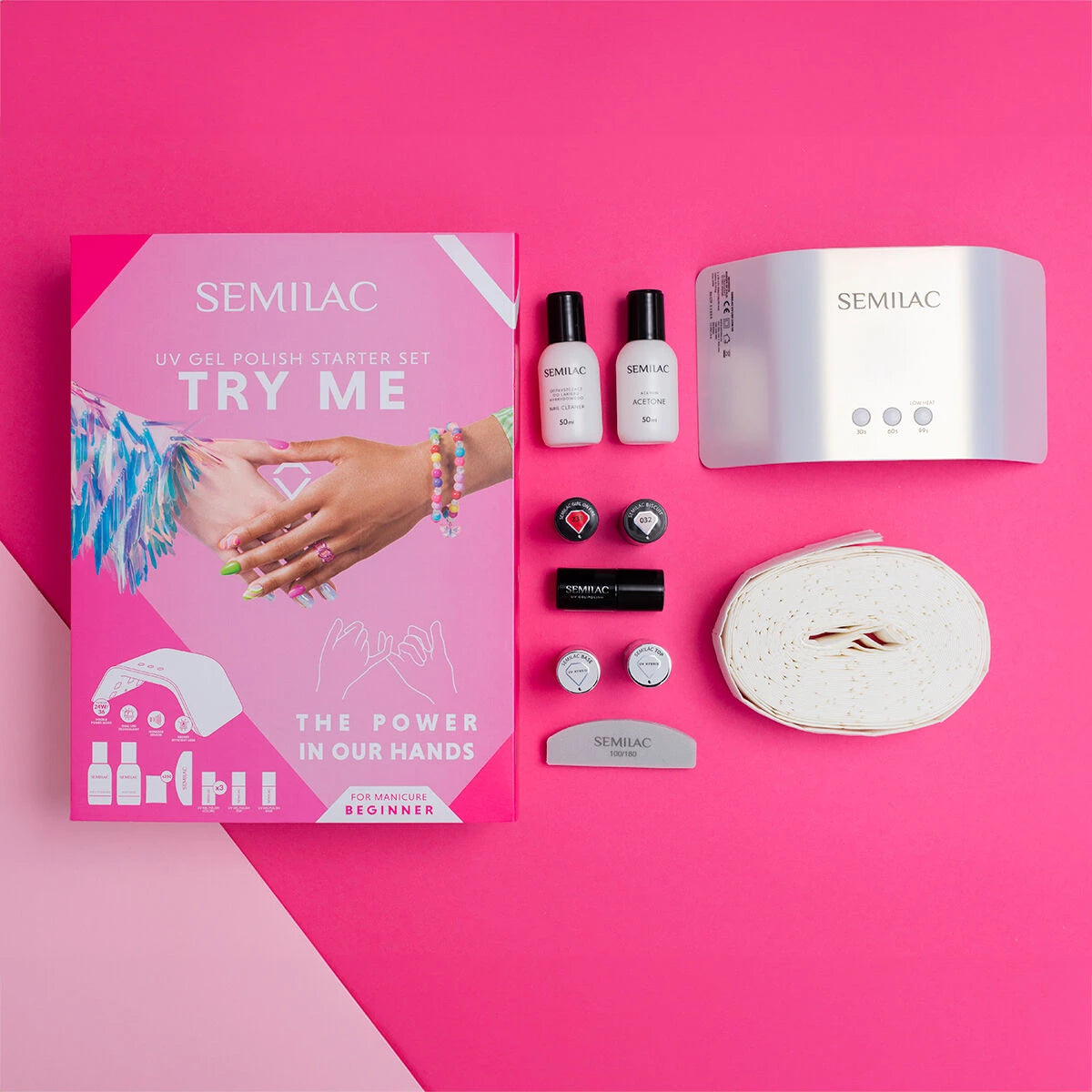
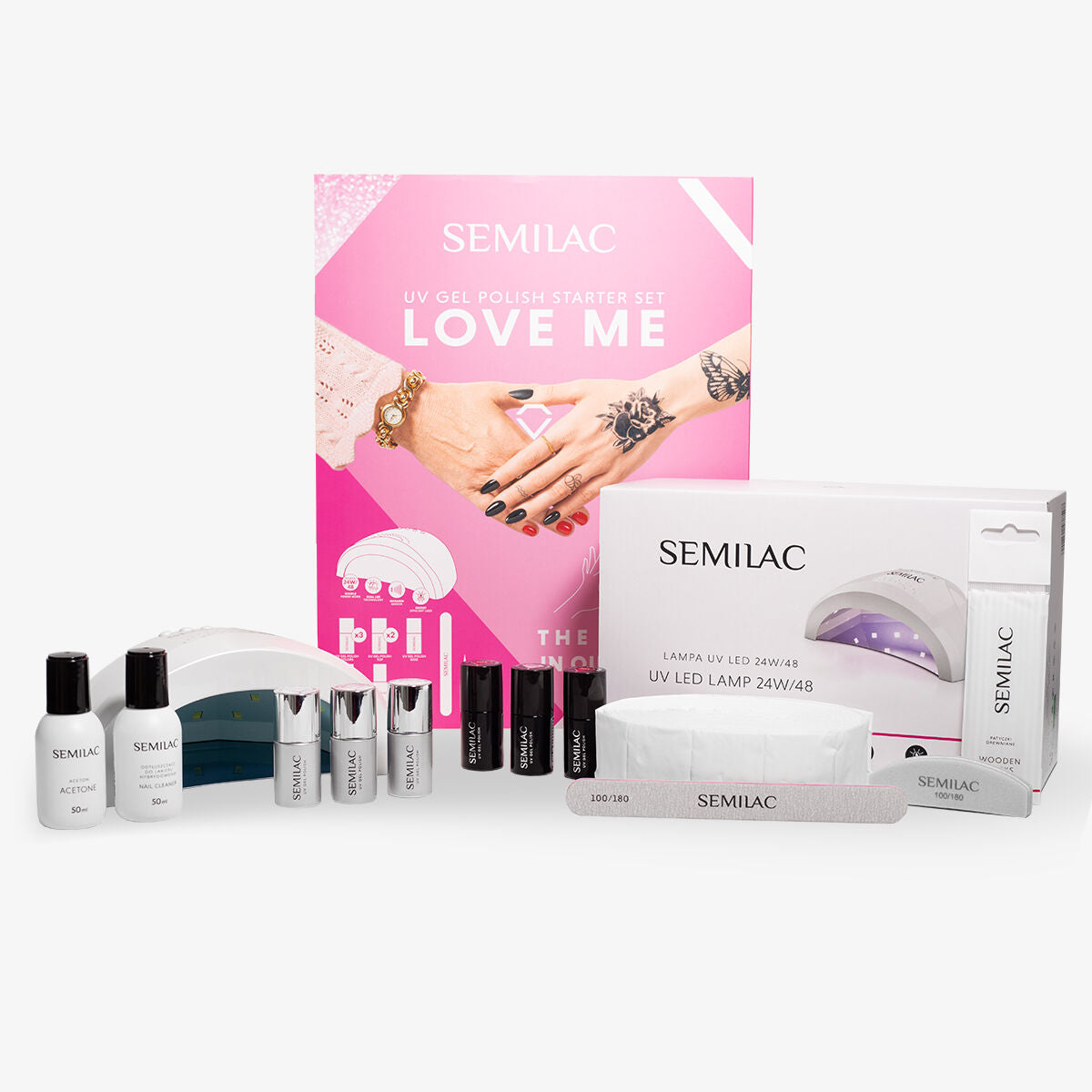
Over 300 Semilac products are TPO-free and they are all in one place. Shop colours, bases, tops and builder gels, or browse the full TPO Free collection.
Is all gel polish being banned?
No. The rules only affect gel products that contain TPO. Everything else carries on exactly as before.
That includes a lot of what is already on the shelf. Brands across the industry reformulated during 2024 and 2025 to meet the EU deadline, so a large share of the gel polish sold in the UK today is already TPO-free. Regular nail polish, which air dries and never goes under a lamp, contains no photoinitiator at all and isn’t affected in any way.
Builder gels, base coats, top coats and one-step gels follow the same rule as colours. If the formula contains TPO, it’s in scope. If it doesn’t, it isn’t.
Do I need to throw away the gel polish I already own?
No. Nothing you already own has to go in the bin.

The rules control what companies can make, import and sell. They don’t control what you do with a bottle you’ve already bought. If you have gel polish at home, you can finish it.
That stays true after 14 February 2027, when TPO products can no longer be sold in Great Britain at all. The date stops sales. It doesn’t ask anyone to destroy what they already own.
What is TPO in gel polish?
TPO is a photoinitiator. It’s the part of the formula that reacts to UV or LED light and turns liquid gel into a hard, dry finish in 30 to 60 seconds. Without a photoinitiator, gel polish would never cure.
The restriction comes from chemical classification rather than from anything new about nails. In 2015 the EU’s Scientific Committee on Consumer Safety reviewed TPO in professional UV nail gels and concluded it was safe at concentrations up to 5%. TPO was later reclassified as a category 1B reproductive toxicant on the basis of animal studies at high doses. Under EU and UK cosmetics law, substances in that category are prohibited in cosmetics automatically, without a fresh product-specific review.
So the ban follows the classification. Regulators and industry bodies have described it as precautionary, and the amount anyone is exposed to during a manicure sits far below the doses used in those studies.
When does the UK TPO ban start?
Three dates matter in Great Britain (England, Scotland and Wales).

In short: manufacturing stops on 15 August 2026, selling stops on 14 February 2027, and anything you already own stays yours to use after that.
Northern Ireland follows the EU timetable, where TPO has been prohibited since 1 September 2025.
Some coverage suggests gel polish becomes illegal overnight on 15 August 2026. The August date applies to manufacturing and placing on the market. Retail sell-through runs until February 2027.
Can my salon still use its existing products?
In Great Britain, yes, with a limit on buying.
Salons can buy TPO-containing products until 14 February 2027. After that date they can’t buy more, and industry guidance is that products already purchased may still be used on clients.
Northern Ireland and the EU work differently. There, applying a TPO product to a client counts as making it available on the market, so professional use stopped on 1 September 2025 with no use-up period.
If you’re a nail tech, the useful question is how much TPO stock you want to be sitting on in early 2027.
How can I check whether gel polish contains TPO?
Read the ingredients on the bottle or the box. You’re looking for:
Trimethylbenzoyl Diphenylphosphine Oxide
You may also see it written as Diphenyl(2,4,6-trimethylbenzoyl)phosphine oxide. Same thing.
One thing catches people out. TPO-L is a different ingredient, one of the alternatives brands have moved to, and it isn’t covered by the restriction. Seeing the letters TPO inside a longer name doesn’t mean the product is affected.
If a brand has reformulated, the ingredient list on a newer bottle will differ from an older one. Check the bottle in your hand rather than a photo online.
What is the difference between TPO-free and HEMA-free?
Two different ingredients doing two different jobs, and only one of them is being prohibited.
- TPO is a photoinitiator. It cures the gel under the lamp.
- HEMA is a monomer. It helps the gel bond to the nail plate.
HEMA is not banned. Since 2021 it has been restricted to professional use, which is why HEMA products carry a “for professional use only” label and an allergy warning. HEMA is the most common cause of allergic reactions to gel products, so HEMA-free formulas exist for people with sensitive skin.
TPO is being prohibited for a separate reason, its reproductive toxicity classification, and that applies to everyone, at home and in the salon.
A product can be TPO-free and still contain HEMA, or HEMA-free and still contain TPO. If both matter to you, check the label for both.

Will TPO-free gel work with my existing lamp?
Yes. You don’t need a new lamp.
The alternatives brands use, mainly TPO-L and BAPO, absorb light in roughly the same range as TPO, around 350 to 420 nanometres. Standard UV and LED nail lamps already emit in that range.
Cure times are unchanged in most reformulated products, and stylists who switched during the EU changeover in 2025 report the same wear and the same shine. If a particular product needs a different cure time, the brand will say so on the bottle.
Is Semilac gel polish TPO-free?
Most of it, yes.
Semilac reformulated its gel range to remove TPO ahead of the EU deadline of 1 September 2025. Over 300 Semilac products sold in the UK are TPO-free, and they’re all in one place: shop the TPO Free collection.
We still have some older stock on the shelves. It was manufactured and imported legally, and under the Great Britain transition rules it can be sold until 14 February 2027. Most of it sits in our outlet and clearance sections. If you’d rather not check anything, shop the TPO Free collection.
If you already own a Semilac polish and want to know which version you have, email contact@semilac.co.uk with the product name and the batch code printed on the bottle, and we’ll look it up for you.
Where can I buy TPO-free gel polish?
Everything in our TPO Free collection is TPO-free, so you can shop it without checking a single label.
It covers the full range, not a small capsule:
- Colours, over 250 shades across classic, glitter, neon, pastel, cat eye and shimmer
- Base coats, including care, fiber and cover bases
- Top coats, gloss, matte and effect finishes
- Builder Gel in a Bottle for extensions and overlays
Free UK delivery on orders over £25.